You Can Have Too Much Inventory and Still Not Have What You Need
American Eagle just discounted excess stock while still not having what shoppers wanted.
Manufacturers hit the same wall with raw materials and components every day.

American Eagle just discounted excess stock while still not having what shoppers wanted.
Manufacturers hit the same wall with raw materials and components every day.

Why manufacturers need to connect inventory, consumption, and time before a shortage becomes a production problem.

Cost cutting and cost removal are not the same thing. Cutting a supplier price or freezing headcount can lower an expense line without eliminating the operational waste that created it. Real cost reduction starts with Operational Truth: knowing exactly what is happening on the floor, where reality has drifted from plan, and what that drift is costing you before you decide what to cut.

How LANCEWOOD cut its production planning cycle from three to five days to three hours by connecting live Syspro data into the spreadsheet its team already used.

Most operational problems are more complicated than they first appear. Inventory is wrong. A production order is late. A pallet cannot be found. A machine is waiting for material. A customer shipment misses its date. A quality issue appears. The instinct is usually to ask for more data, but after years of working with operating teams, I have found that many complicated problems reduce to five remarkably simple questions. We call them the Big Five of Operational Truth.

Manufacturing technology is having an interesting moment. Artificial intelligence is everywhere. Smart factories are moving from PowerPoint to production. Autonomous trucks are proving that automation’s

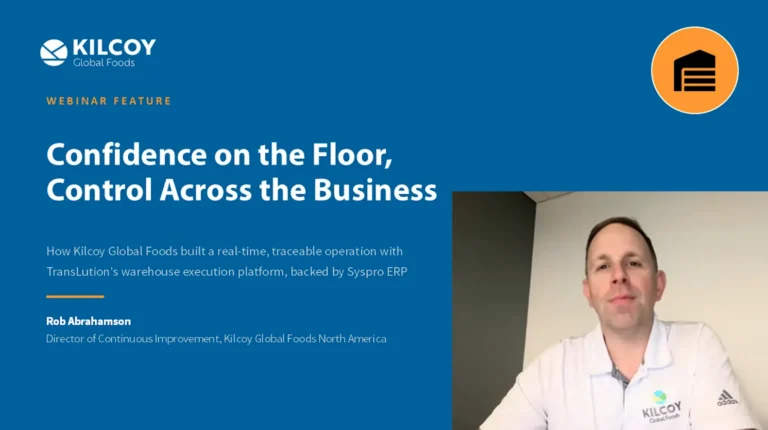
Rob Abrahamson, Director of Continuous Improvement at Kilcoy Global Foods North America, talks about how Kilkoy built a real-time, traceable operation with TransLution’s warehouse execution platform, backed by SYSPRO ERP.

When an unplanned disruption shuts down a manufacturing system, the first priority is obvious. During the outage, physical work in the real world continues while system records stay frozen in time, creating a dangerous truth gap between what actually happened on the floor and what the system believes happened.
This article explores why that gap puts inventory counts, production records, quality status, and traceability at risk even after systems come back online. We lay out five critical questions manufacturers must answer before restarting production safely, how to prepare in advance, and how TransLution helps manufacturers close that gap and restore confidence in their operations after any disruption.

UCL, a diversified agri-processor and sugar producer based in Dalton, KwaZulu-Natal, has successfully implemented TransLution Software at their Sugar Packing Plant (SPP) and Sugar Repacking Plant (SRP). The primary objective of this implementation was to enhance inventory tracking, quality control, and dispatch operations ahead of the 2026 sugar harvest season.

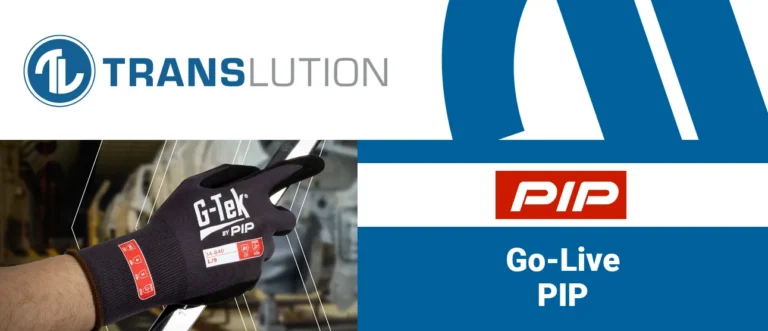
PIP, a distributor of personal protective equipment and safety products, has successfully gone live with TransLution Software across its two-warehouse operation.
The implementation connects PIP’s own warehouse with its third-party logistics warehouse, creating a more streamlined process for transferring stock and managing inventory between the two locations.

A&A Electrical, part of the Dewhurst group, supplies lift and electrical products to customers who rely on quick quotations, accurate stock availability and next-day delivery. Find out how TransLution brought enterprise-scale visibility, productivity and inventory control to this specialist electrical distribution business – without enterprise-scale investment.

Pierce, a manufacturer of large construction machinery and equipment, has successfully implemented TransLution Software in a phased approach. The initial phase focused on establishing job tracking capabilities to provide real-time visibility of manufacturing operations.

RSC Ekusasa Mining, a manufacturer within the Barnes Group, has successfully implemented TransLution Software across their three receiving warehouses.

As Corinthian Furniture’s business grew, their existing inventory system couldn’t keep pace. By implementing TransLution in phases over two years, the company improved warehouse control, introduced innovative RFID-driven work-in-progress tracking, and built stronger traceability across its operations.

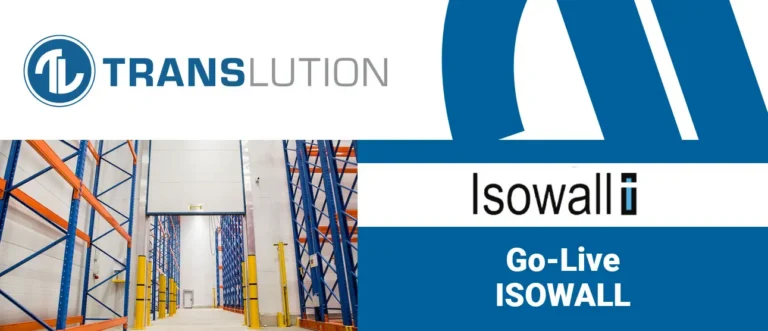
Isowall, a leading manufacturer serving the automotive industry, has successfully gone live with TransLution Software in a phased implementation approach.

Peregrine, a UK-based exotic pet and reptile supplies company, has successfully implemented TransLution Software to enhance order picking and dispatch operations for their unique product range.

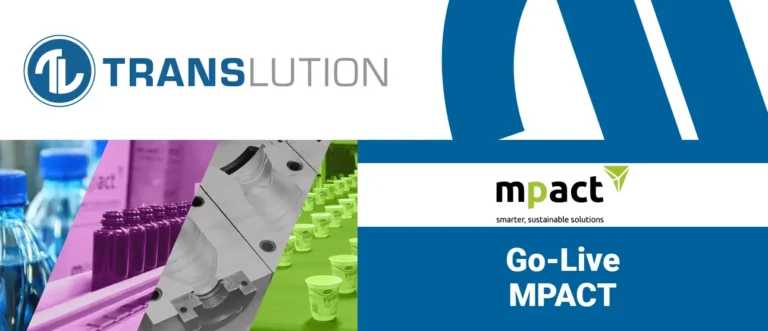
MPact, a leading supplier of plastic containers in Southern Africa, has expanded their TransLution implementation with the introduction of asset tracking at three of their injection moulding facilities: Castle View, Atlantis, and Brits.

The latest TransLution upgrade is here — designed to make your system faster, smarter, and more intuitive.
From enhanced reporting and web access to smarter defaults and stronger security, version 7.4 helps your teams work more efficiently, wherever they are.
TransLution isn’t just for manufacturing and warehousing — it’s a powerful platform for transforming processes in any industry.
At OAPL, a leading Australian orthotic and prosthetic provider, clinical documentation had become a major operational challenge.

Eya Bantu, a manufacturer of switchgear and control plant panels, has successfully implemented TransLution Software at their Port Elizabeth facility. This implementation marks the first step in their journey toward company-wide process automation and standardization.

Millennium Foods, a division of Libstar specializing in frozen ready meals, has successfully implemented TransLution Software to enhance their warehouse operations and inventory management processes. This implementation has transformed their stock control procedures from raw material receiving through to production supply.
| Cookie | Duration | Description |
|---|---|---|
| cookielawinfo-checkbox-analytics | 11 months | This cookie is set by GDPR Cookie Consent plugin. The cookie is used to store the user consent for the cookies in the category "Analytics". |
| cookielawinfo-checkbox-functional | 11 months | The cookie is set by GDPR cookie consent to record the user consent for the cookies in the category "Functional". |
| cookielawinfo-checkbox-necessary | 11 months | This cookie is set by GDPR Cookie Consent plugin. The cookies is used to store the user consent for the cookies in the category "Necessary". |
| cookielawinfo-checkbox-others | 11 months | This cookie is set by GDPR Cookie Consent plugin. The cookie is used to store the user consent for the cookies in the category "Other. |
| cookielawinfo-checkbox-performance | 11 months | This cookie is set by GDPR Cookie Consent plugin. The cookie is used to store the user consent for the cookies in the category "Performance". |
| viewed_cookie_policy | 11 months | The cookie is set by the GDPR Cookie Consent plugin and is used to store whether or not user has consented to the use of cookies. It does not store any personal data. |